Essential Oil Bottles — Amber Glass & Dropper Bottles
Amber and clear essential oil bottles, 5 to 100 ml, with dropper, roller or screw caps. UV-protective glass, tamper-evident seals. MOQ 3,000 pcs.
Essential oils need UV protection and a closure that will not degrade on contact with the oil. We supply amber, cobalt blue and clear bottles from 5 ml to 100 ml, fitted with glass pipette droppers, roller balls or screw caps with PTFE-lined gaskets. Stock moulds ship from 3,000 pieces with 7–15 days lead time.
Why is amber glass used for essential oils?
Amber glass filters most ultraviolet and short-wavelength visible light, which is what degrades terpenes and causes oils to oxidise and lose scent. Clear glass transmits almost all of it. If your product is sold in a box the box already protects the bottle, so clear glass is acceptable and cheaper; if it sits on an open shelf or in a bathroom, amber or cobalt is the practical choice for shelf life and for customer perception.
Dropper, roller ball or screw cap — which one?
A glass pipette dropper gives precise drop-by-drop dosing and is the default for pure essential oils and serums. A roller ball suits blends applied directly to skin, especially 5–10 ml travel sizes. A screw cap with a dropper insert is the cheapest option and is used where the customer decants into another container. All three fit the same 18 mm neck on most of our stock moulds, so you can offer variants without changing the bottle.
What causes dropper leaks and how do you prevent them?
Leaks almost always come from the gasket, not the glass. A rubber gasket swells when it contacts essential oils and eventually weeps; a PTFE-faced or PTFE-lined gasket resists oil and does not swell. We fit PTFE-lined gaskets as standard on essential oil orders. The second cause is an out-of-round bottle neck, which we control by gauging the neck finish on every production batch.
Can you supply tamper-evident closures?
Yes — a tamper-evident band that breaks on first opening, and shrink bands in clear or printed film. This matters for retail and for markets where cosmetic products must show evidence of non-tampering. Shrink bands are the cheaper option per unit; a breakaway band looks more premium but adds to the closure cost.
Do you supply labels and boxes as well?
We can apply your label at the factory — roll labels, shrink sleeves or silk-screened decoration directly on the glass. Silk-screen on glass is the most durable because it cannot peel, but it needs a minimum of 3,000 pcs and a one-off screen cost. Roll labelling has no minimum and is the usual route for small brands launching their first SKU.
Stock essential oil bottle sizes
| Capacity | Neck | Closure options | Carton qty |
|---|---|---|---|
| 5 ml | 18 mm | Dropper, roller, screw | 2,000 pcs |
| 10 ml | 18 mm | Dropper, roller, screw | 1,500 pcs |
| 15 ml | 18 mm | Dropper, roller, screw | 1,200 pcs |
| 30 ml | 18 mm | Dropper, screw | 800 pcs |
| 50 ml | 18 mm | Dropper, screw | 600 pcs |
| 100 ml | 18 mm | Dropper, screw | 400 pcs |
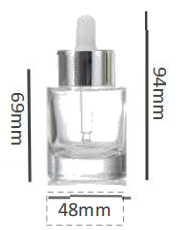
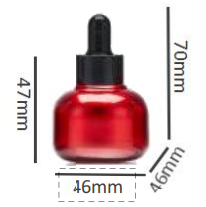
Products in this category (2)
Frequently asked questions
What is the MOQ for amber dropper bottles?
3,000 pcs per model on existing moulds and 10,000 pcs for a new mould, with the figure printed on each product page. Droppers and roller assemblies carry no separate minimum beyond the bottle quantity, so you order a complete pack rather than bottles you still have to fit out locally.
Are the droppers glass or plastic?
The pipette is glass and the bulb is either silicone or nitrile rubber. Silicone is more chemical-resistant and is recommended for pure essential oils; nitrile is cheaper and used for carrier-oil blends.
Can you print dosage markings on the dropper?
Yes — graduation marks on the pipette or on a printed label around the bottle. Graduated pipettes need a minimum of 5,000 pcs because they are produced as a separate mould.
Do you supply cobalt blue and frosted bottles?
Yes, cobalt blue and frosted amber are both available in 10 ml and 15 ml. Frosting adds 2–3 days to the lead time and a per-unit cost similar to spray coating.
What certifications apply to essential oil bottles?
FDA and LFGB food-contact reports for the glass, and MSDS plus migration testing for the gaskets and dropper bulbs. Reports are issued per production batch.
How are dropper bottles packed to avoid breakage?
Each bottle sits in a partitioned EPE tray, with droppers in a separate compartment of the same carton. This keeps breakage under 1% in transit, which is the usual claim limit at most forwarders.
Need a bottle that is not listed?
Send a drawing, a physical sample, or just the capacity and neck size. We reply with a quotation and a sampling plan within 24 hours.