South Africa
Glass Perfume, Essential Oil & Cosmetic Bottle Supplier for South Africa
South African fragrance, skincare and essential oil brands buy the same small formats as the rest of our export book: 5–100 ml perfume bottles, amber droppers and 30–50 g cream jars, from 3,000 pieces per model, shipped to Durban and on to Gauteng.
Reply within 24 working hours — MOQ, price and the next sailing date.
South Africa has a mature private-label beauty market, and the packaging brief is usually a colour-matched coating with a printed logo on a stock shape — not a new mould. That suits how we work: the mould stays in our tool room, decoration runs in batches of 5,000, and a repeat order is a production slot rather than a tooling project. Everything we quote here sits between 5 and 150 ml.
What glass packaging do we supply into South Africa?
Perfume and fragrance bottles in 5–100 ml, essential oil bottles in 10–30 ml amber with glass droppers, roll-on bottles in 10–15 ml, and cream jars in 30–50 g clear, frosted or amber. Unlike Nigeria, South Africa has no capacity prohibition on imported hollow glass — there is no 150 ml ceiling to design around here. The reason our South African business still concentrates under 150 ml is commercial, not legal: large food and beverage jars are made locally by established producers who beat an imported container on landed cost. Where we win is the small-format work those producers do not want to run — a 3,000-piece decorated batch, a Pantone coating, a logo printed in four colours.
How do you ship to Durban and Johannesburg, and how long does it take?
Lianyungang to Durban is about 24–30 days at sea, and containers move on to Johannesburg or Pretoria by rail or road in another 2–4 days. Add 25–35 days of production, so a full cycle is 7–10 weeks. Durban handles most of the volume; Cape Town is 4–6 days longer and suits Western Cape producers better than trucking from KwaZulu-Natal.
What is the MOQ for a South African first order?
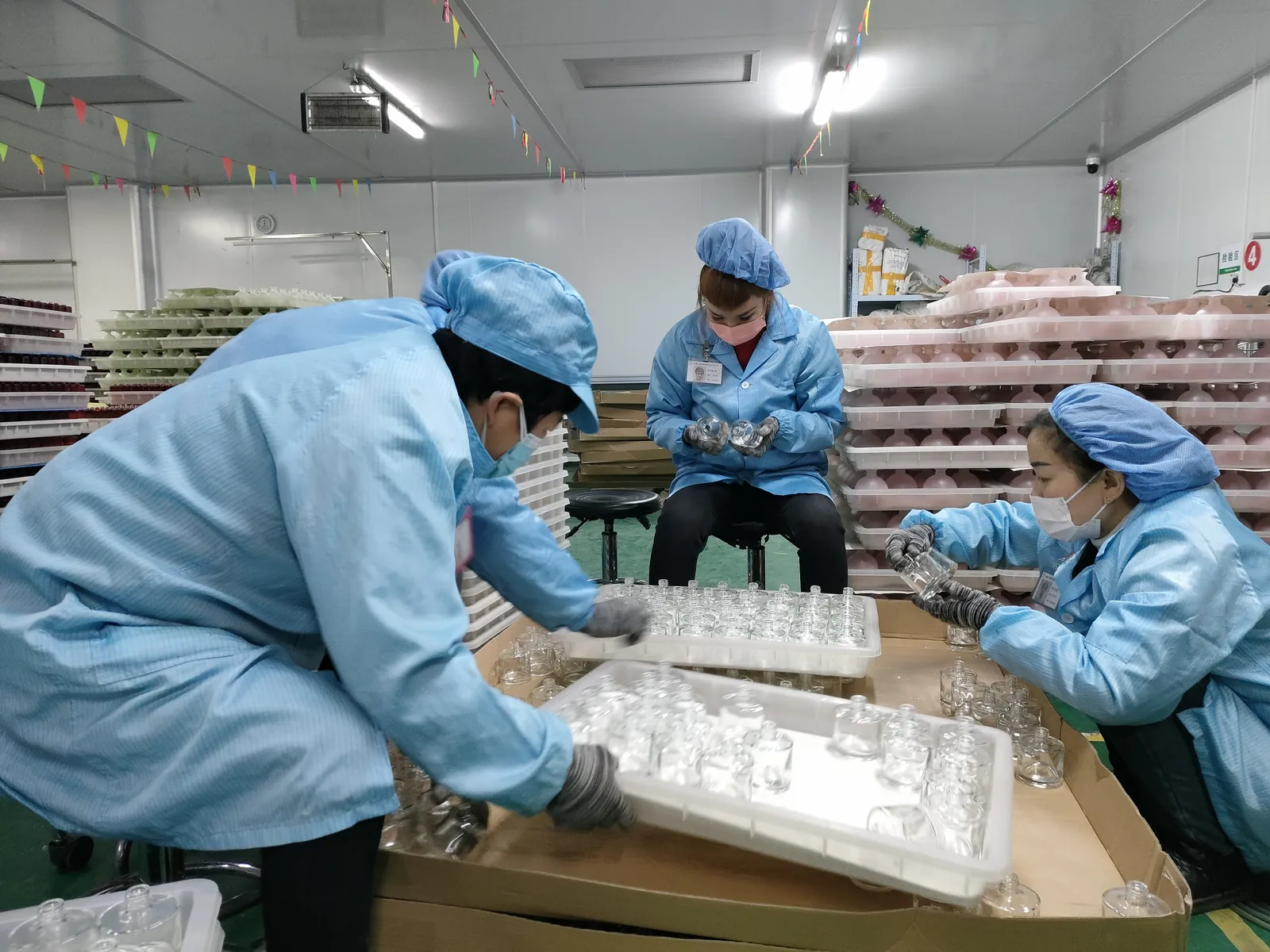
3,000 pieces per model on moulds we already hold, 10,000 pieces for a new shape. Sizes from the same mould family combine to a 5,000-piece total, which is how most brands trial a range: a 30 ml and a 50 ml perfume bottle, or a 30 g and a 50 g cream jar together. The 5,000 comes from freight rather than production — it fills about one cubic metre, the minimum most forwarders bill for an LCL sailing to Durban, so a smaller trial shipment is charged for space it does not use. Printing or coating starts at 5,000 pieces per design.
Which documents do South African importers need from us?
We provide the commercial invoice, packing list, bill of lading, certificate of origin and the test reports your buyers will ask for — FDA and LFGB migration results, plus MSDS for coatings and inks. Customs clearance runs through your SARS-registered importer and clearing agent; we make sure the HS codes and product descriptions on the documents match what is actually in the container, which is where most delays start.
Can you match a brand colour, print and frost the glass?
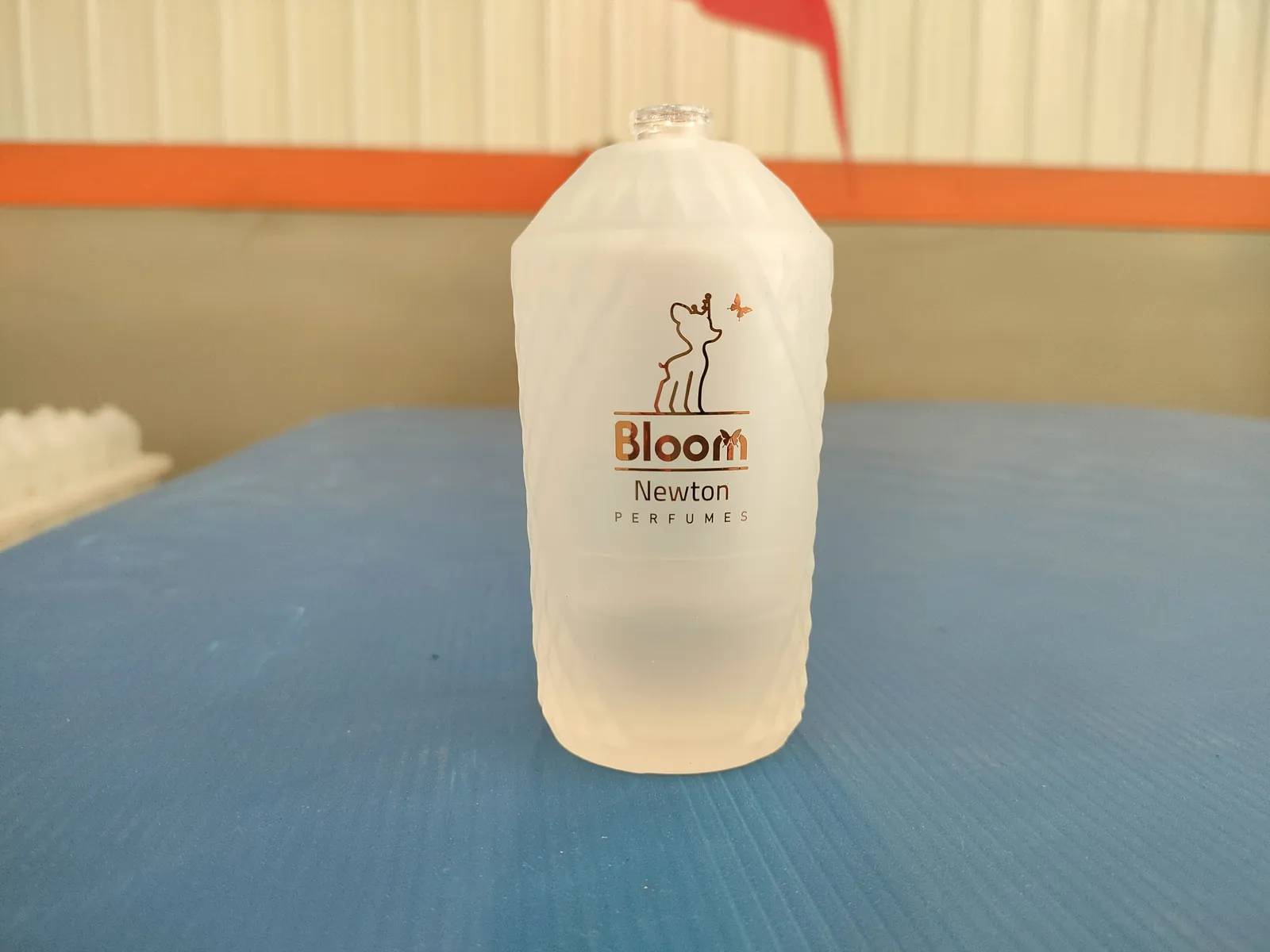
Yes. Spray coating to a Pantone reference, silk-screen printing in up to four colours, frosting, hot-stamp foil and laser engraving. Artwork proofing takes 3–5 days and a decorated sample about a week. For skincare, the common brief is a frosted bottle with a one-colour print; for fragrance it is a solid coating with a metallic foil logo.
Do you supply pumps, droppers and caps with the bottles?
Yes — crimp pumps and sprayers in 13 mm and 15 mm, glass and plastic droppers, roller assemblies, collars and metal or plastic overcaps, matched to the neck finish and shipped together. You receive a complete pack rather than bottles waiting on closures sourced separately, and assembled or separately packed both work.
Sea transit times from China to South African ports
| Port of discharge | Typical transit | Notes |
|---|---|---|
| Durban | 24–30 days | Main gateway; +2–4 days by rail or road to Johannesburg |
| Cape Town | 28–34 days | Better for Western Cape producers |
| Coega / Port Elizabeth | 28–35 days | Eastern Cape, smaller vessel frequency |
| Maputo + road to Gauteng | 26–32 days | Sometimes faster into Johannesburg, adds a border crossing |
Transit times are typical sailing days from Lianyungang and exclude production; confirm the current schedule when we book your container.
Questions South African buyers ask before ordering
What is your MOQ for export to South Africa?
3,000 pieces per model on existing moulds and 10,000 pieces for a new mould. Sizes from the same mould family combine to a 5,000-piece total, and printed or coated orders start at 5,000 pieces per design.
Why does a mixed order need 5,000 pieces when one model is 3,000?
Freight, not production, sets that number. 5,000 bottles at 15–50 ml fill roughly one cubic metre of cartons, and one cubic metre is the minimum volume most forwarders bill on an LCL sailing to Durban. Ship 2,000 instead and you still pay for the cubic metre, so freight per bottle more than doubles. Pooling sizes from the same mould family up to 5,000 is what keeps unit cost down. Rates change, so we quote the rate in force on the day we book.
How long does shipping to Durban take?
About 24–30 days at sea from Lianyungang, plus 25–35 days of production — roughly 7–10 weeks from deposit to arrival. Johannesburg and Pretoria add another 2–4 days inland. We book the sailing when artwork is approved so the container does not wait at the port.
Is there a size limit on glass bottles imported into South Africa?
No. South Africa has no prohibition on hollow glass by capacity — the 150 ml ceiling that applies to Nigeria is a Nigerian rule, not a South African one, so a 250 ml or 500 ml bottle can be imported and cleared through your SARS-registered agent. What limits the range here is competition rather than regulation: large food and beverage jars are produced locally, and an imported container rarely beats local supply on landed cost. That is why our South African shipments stay in fragrance, essential oil and cosmetic glass under 150 ml.
Can you make custom printed bottles for a South African beauty brand?
Yes. Spray coating to Pantone, silk-screen printing in up to four colours, frosting and hot stamping are all done at our deep-processing base. Proofs take 3–5 days and a decorated sample about a week.
How do we pay, and do you accept letters of credit?
Standard terms are 30% T/T deposit with the balance against the B/L copy. Irrevocable L/C at sight is accepted for orders above roughly USD 30,000. We issue a proforma invoice with the HS codes and packing details your bank needs.
Do you have stock available for repeat orders?
We hold the moulds rather than finished cartons, so a repeat order means a production slot of 7–15 days when the line is free, with no tooling cost. Tell us the model and quantity and we will confirm the earliest run date.
Get a quote for South Africa
Send the jar size, quantity and finish you need. We reply with price, MOQ and the next sailing date — usually within one working day.