Nigeria
Glass Perfume Bottle, Attar & Cream Jar Supplier for Nigeria
Nigeria imports small-format glass, not bulk food jars: 5–100 ml perfume bottles, 10–30 ml amber droppers for essential oils and attar, and 30–50 g cream jars. We stock moulds across that range from 3,000 pieces per model.
Reply within 24 working hours — MOQ, price and the next sailing date.
A Nigerian order is usually a mixed container of small formats rather than one big SKU: a 50 ml perfume bottle for a Lagos fragrance house, a 10 ml amber dropper for an attar or essential oil brand, a 30 g cream jar for a skincare line. All three sit inside 150 ml, which is the practical ceiling for imported glass in this market. Mixing them from the same mould family is how a first order reaches 5,000 pieces without paying tooling — and 5,000 is not an arbitrary number: it packs into about one cubic metre, the smallest shipment most forwarders will book.
Why does every Nigerian glass order stop at 150 ml?
Because it is a legal limit, not a market preference. Nigeria’s 2026 fiscal policy measures, in force since 1 April 2026, place hollow glass bottles above 150 ml on the import prohibition list — item 15 of a 17-category schedule that applies to goods originating outside ECOWAS. The wording is specific: “hollow glass bottles of a capacity exceeding 150 mls (0.15 litres), such as carboys, bottles and flasks.” A 200 ml bottle shipped from China to Lagos is a prohibited import, and a container held on that basis is a loss for the importer, not the forwarder. It also explains why the entire local filling industry — perfume, attar, essential oil, skincare — works inside 150 ml. If your product has to be larger, the realistic routes are a different material or filling from a bulk pack locally. We would rather tell you this before you order than have customs tell you after.
What glass packaging actually sells into Nigeria?
Small formats, almost exclusively. Perfume and attar bottles run 5–100 ml, essential oil bottles 10–30 ml in amber with a glass dropper, roll-on bottles 10–15 ml, and cream jars 30–50 g in clear or frosted glass. That range is not an accident of taste — it is what the 150 ml prohibition leaves room for, and it shapes how the whole trade works: small packs, heavy decoration, brand value carried by the print and the coating rather than by volume. An order is usually a mixed set of sizes from the same mould family rather than one large SKU.
Do you supply attar and perfume oil bottles for the Nigerian market?
Yes, and for most Nigerian buyers this is the larger half of the order. Perfume oil — attar, oud, alcohol-free fragrance — is the dominant glass fragrance category here: it sits well with the alcohol-free preference in the north, it lasts longer in the heat than an alcohol spray, and a 10 ml roll-on lands at a retail price that competes with imported designer sprays. The sizes that move are 6 ml and 12 ml for retail attar, 10 ml roll-on as the volume item, 3 ml for samples and wedding favours, and 30 ml for refill and premium lines. We supply steel roller ball fittings, glass pipette droppers and screw caps together with the bottle, in clear, amber and frosted glass. Nothing in this range comes near the 150 ml ceiling, so the prohibition never comes into play for attar.
Are there perfume bottle manufacturers in Nigeria?
Not at commercial scale. A glass furnace has to run continuously, 24 hours a day, for years — stopping and restarting costs more than running it — and that needs reliable power and cheap gas at a volume no single perfume-bottle plant in Nigeria can underwrite. So every perfume, attar and dropper bottle sold in Lagos, Kano or Onitsha is imported, mostly from China and the UAE. What Nigeria does have is a large finishing and filling industry: importers in Balogun, Idumota and Ojota buy empty bottles by the container and add roll-ons, caps, labels and boxes locally. That is the layer where you actually compete, which makes the useful question not who makes bottles in Nigeria, but which route lands a container at Apapa at the lowest landed cost. A Chinese factory quotes the bottle, the fitting, the cap and the print together and loads at Lianyungang; a Lagos trader selling you the same bottle has already paid the freight once.
How do you ship glass bottles to Lagos, and how long does it take?
From Lianyungang to Apapa or Tin Can Island is about 30–38 days at sea, plus 25–35 days of production, so plan on 8–11 weeks from deposit to arrival. Small bottles are light, so a 40HQ fills by volume rather than weight and you can fit a wide mix of SKUs in one container. LCL consolidation works here too — at this size the cartons are compact and breakage risk is far lower than with large jars.
What is the MOQ, and how is a first Nigerian order structured?
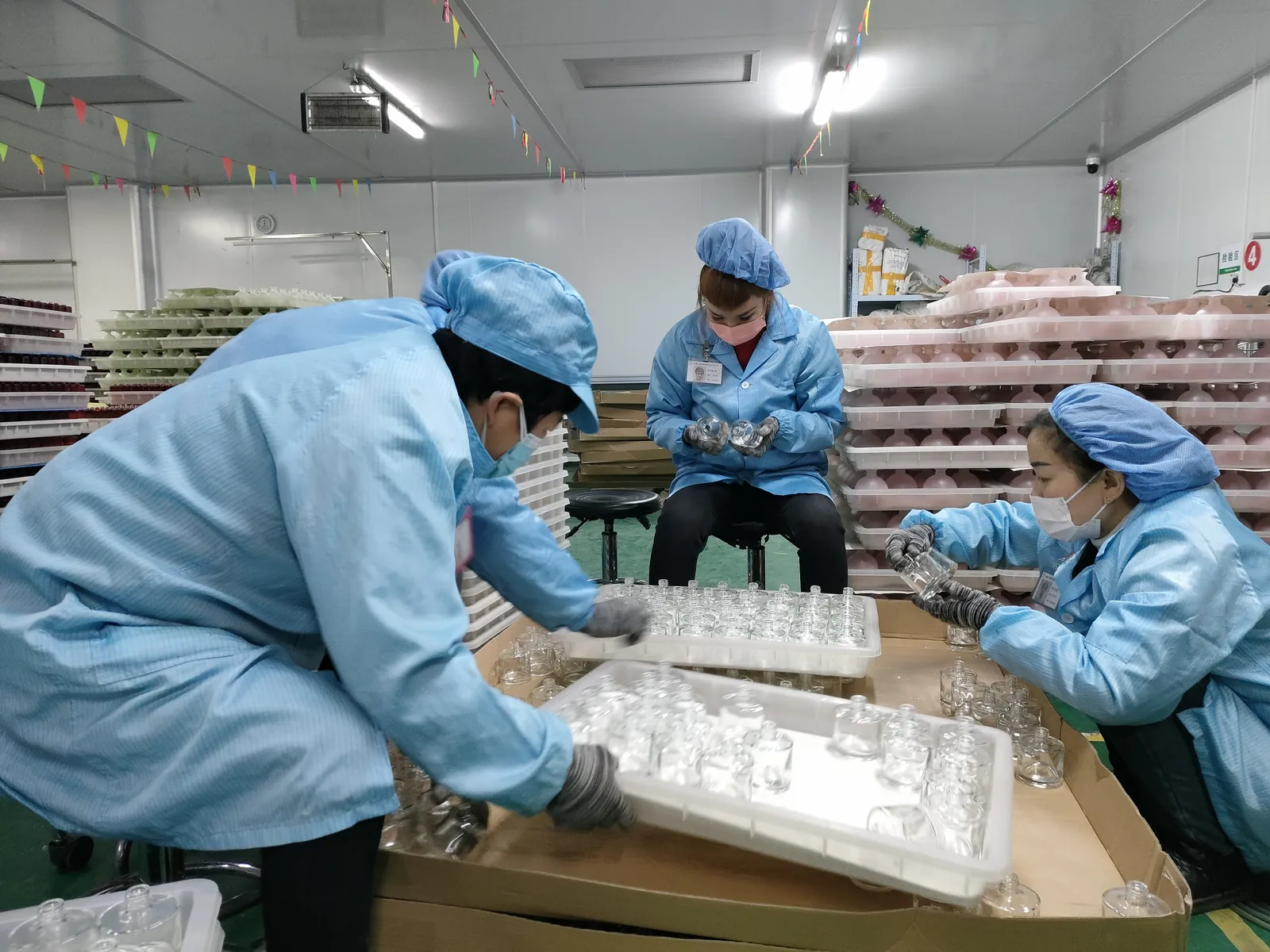
3,000 pieces per model on moulds we already hold, 10,000 pieces if a new shape has to be tooled. If you want to trial a range, sizes from the same mould family combine to a 5,000-piece total — a 10 ml, a 30 ml and a 50 ml perfume bottle on one order is the usual Lagos mix. That 5,000 is set by freight, not by the furnace: it packs into roughly one cubic metre, and one cubic metre is the minimum most forwarders bill for LCL, so a 2,000-piece shipment pays for space it never fills. Printing, coating or frosting starts at 5,000 pieces per design because the decoration line is set up per colour.
Which import documents can you prepare for Nigerian customs?
We issue the commercial invoice, packing list, bill of lading and certificate of origin, and supply FDA and LFGB food-contact and skin-contact test reports plus MSDS for any coating or ink used. SONCAP follows the Product Certificate route that your Nigerian agent registers — we provide product photos, HS codes, test reports and factory details for that filing. Form M and PAAR stay with you and your bank, since they must be raised inside Nigeria.
Can you match our brand colour, print the bottle and frost the glass?
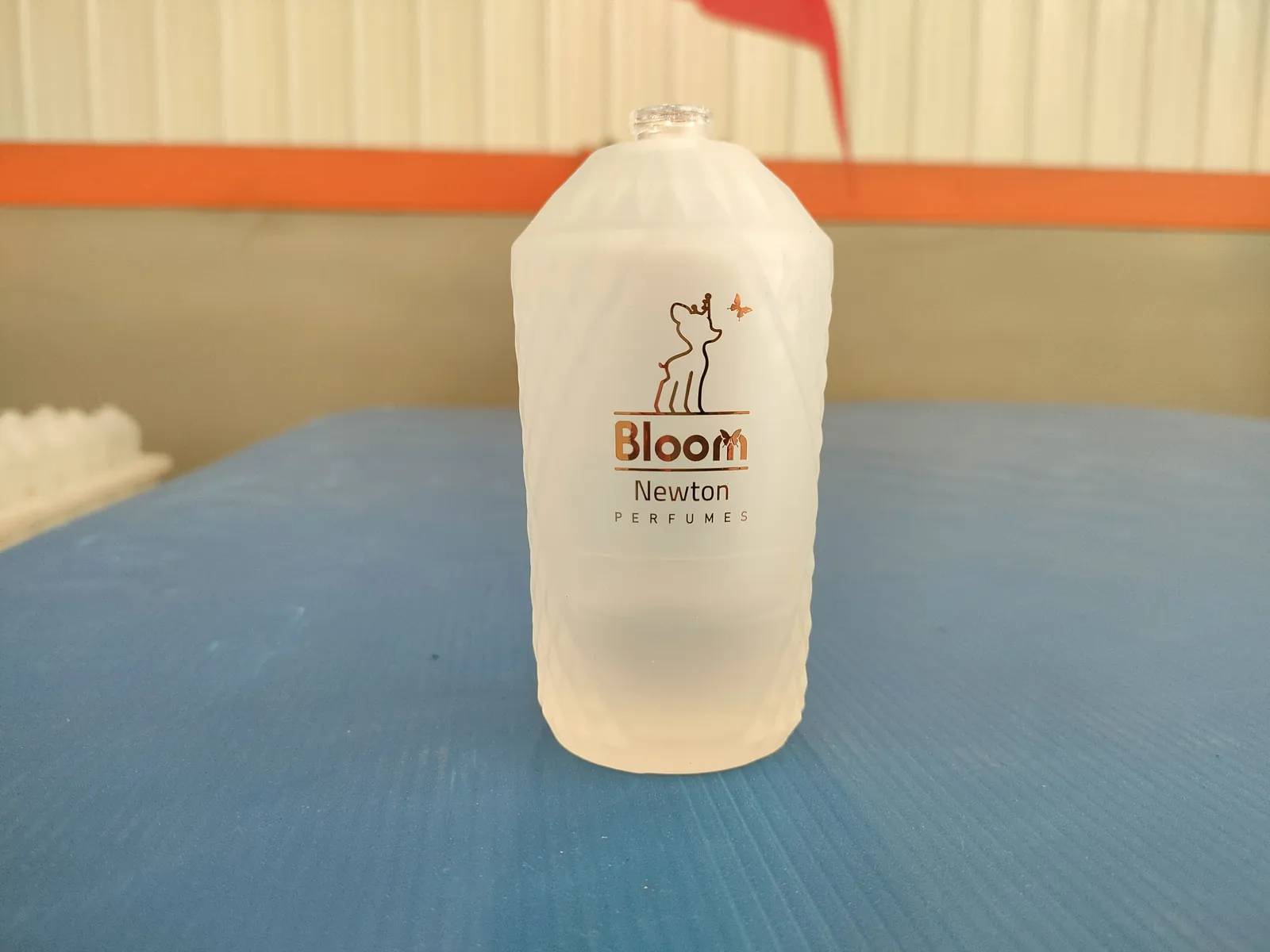
Yes. Silk-screen printing in up to four colours, spray coating to a Pantone reference, frosting, hot-stamp foil and laser engraving are all done at our deep-processing base. Artwork proofing takes 3–5 days and a decorated sample about a week. For perfume and attar, the usual finish is a coloured coating with a screen-printed logo on top, so send the Pantone numbers you want matched.
Do you supply the pumps, droppers and caps with the bottles?
Yes, and for Nigeria this matters more than the glass. Crimp pumps and sprayers in 13 mm and 15 mm, glass and plastic droppers, roller assemblies, collars and metal or plastic overcaps are matched to the bottle neck and shipped together, so you receive a complete pack instead of bottles waiting on closures that are hard to source locally. Assembled and separately packed both work.
Sea transit times from China to Nigerian ports
| Port of discharge | Typical transit | Notes |
|---|---|---|
| Lagos — Apapa | 30–38 days | Main gateway for fragrance and cosmetics importers |
| Lagos — Tin Can Island | 30–38 days | Busy in peak season; book space early |
| Onne / Port Harcourt | 35–42 days | For south-east Nigeria |
| Cotonou + road to Lagos | 32–40 days | Sometimes cheaper, adds a border crossing |
Transit times are typical sailing days from Lianyungang and exclude production; confirm the current schedule when we book your container.
Questions Nigerian buyers ask before ordering
What is your MOQ for export to Nigeria?
3,000 pieces per model on moulds we already hold, and 10,000 pieces if a new mould has to be cut. Mixed sizes from the same mould family combine to a 5,000-piece total, and decorated orders start at 5,000 pieces per design.
Why is a mixed order 5,000 pieces when one model is only 3,000?
Because freight decides it, not production. 5,000 bottles at 15–50 ml pack into about one cubic metre of cartons, and one cubic metre is the smallest volume most forwarders bill for a sea LCL shipment. Ship 2,000 pieces and you still pay for the full cubic metre, so freight per bottle more than doubles. Pooling several sizes from the same mould family up to 5,000 keeps landed cost per unit where it should be. Ocean rates move week to week, so we quote the rate in force on the day we book rather than publish a fixed number.
Can I import 200 ml or 500 ml glass bottles into Nigeria?
Not from China. Hollow glass above 150 ml sits on Nigeria’s import prohibition list under the 2026 fiscal policy measures — item 15 of 17, in force since 1 April 2026, applying to goods originating outside ECOWAS. A shipment declared above that limit risks being held or refused at the port, and the cost sits with the importer. If your pack has to be larger than 150 ml, the practical routes are PET or another material, or filling from a bulk pack locally. For Nigeria we only quote glass at or below 150 ml.
Can you handle SONCAP registration for us?
No — SONCAP is registered inside Nigeria by your agent against a Product Certificate, and it cannot be issued from China. What we supply is everything that filing needs: product photos and dimensions, HS codes, FDA and LFGB test reports, MSDS for any coating or ink, and factory details. Send us the checklist your agent uses and we will fill in the part that comes from our side.
How long does shipping to Lagos port take?
About 30–38 days at sea from Lianyungang to Apapa or Tin Can Island, on top of 25–35 days of production. From deposit to arrival is normally 8–11 weeks; we book space once your artwork is approved so production and the sailing line up.
Can you make custom printed perfume bottles for a Nigerian brand?
Yes. Silk-screen printing in up to four colours, spray coating to a Pantone reference, frosting and hot stamping — proofs in 3–5 days, decorated sample in about a week. Coating plus print is the standard finish for Lagos fragrance brands.
How do we pay, and can we use a letter of credit?
Standard terms are 30% T/T deposit with the balance against the B/L copy. For orders above about USD 30,000 we accept an irrevocable L/C at sight. Nigerian importers usually pair this with Form M, which your bank raises against our proforma invoice.
Do you supply pumps, droppers and caps together with the bottles?
Yes. Crimp pumps and sprayers in 13 mm and 15 mm, glass droppers, roller assemblies and overcaps are matched to the neck finish and shipped with the bottles, so you get a complete pack rather than bottles you still have to fit out.
Get a quote for Nigeria
Send the jar size, quantity and finish you need. We reply with price, MOQ and the next sailing date — usually within one working day.