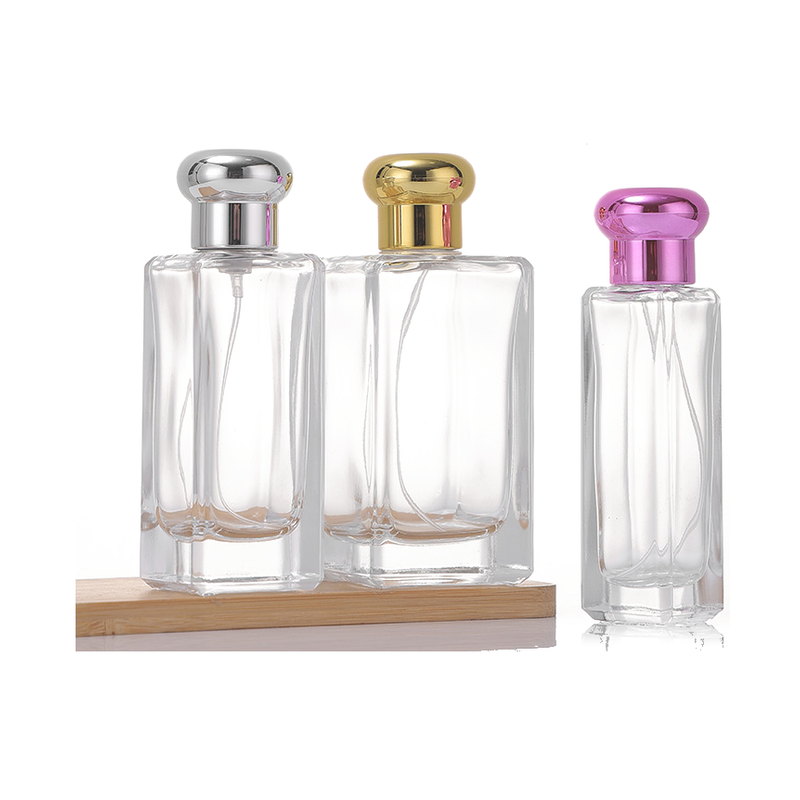
Bottle choice decides a third of your unit cost, your freight budget and how the product looks on the shelf. This guide walks through the decisions in the order a sourcing project actually hits them.
1. Start with volume and format
Perfume and essence packaging follows well-established size tiers: 5 ml and 10 ml rollers, 10-30 ml dropper bottles for essential oils, 30-50 ml for mainstream fragrance, and 100 ml for premium lines. The format drives everything downstream — a 5 ml roller needs a 13-15 mm neck finish, while 100 ml flacons typically use 18-24 mm. Decide the format before comparing quotes, or you will end up comparing prices for different products.
2. Match the bottle to the closure
The most common mismatch we see is a bottle quoted with the wrong closure family:
- Spray pumps (fumigators) — 13 mm, 15 mm, 18 mm and 20 mm diameters; pump output (0.10-0.18 ml/spray) matters more than most buyers realize, because a 0.18 ml pump on a 10 ml bottle feels wasteful to the end customer.
- Dropper caps — standard on essential-oil bottles; check whether you need a dropper bulb in silicone or rubber.
- Screw caps — smooth or ribbed aluminum, plastic (PP, ABS, PCR), bamboo or wood. Ribbed aluminum is the safe default for screening and hot stamp.
- Dispenser / push-pull — for nail polish, toner and serum; tolerances are tighter, so mold reuse matters.
3. Understand the three glass materials
Soda-lime glass is the industry standard: clear enough, fully recyclable, and the cheapest to produce. High-white (crystal-clear) glass removes the green tint of standard flint glass and makes amber, cobalt and frosted finishes look premium — it costs 15-30% more and is what most fragrance brands use for their hero SKUs. Lead-free crystal has the brilliance of crystal without regulatory concerns and is usually reserved for gift sets and premium decanters.
4. Decoration that survives freight
Silk screen (1-6 colors), hot stamp, metallization, spray coating and frosting are all standard on perfume glass. Two practical rules: one-color printing starts around ¥0.05 per piece, and any decoration must pass a cross-hatch adhesion test plus an alcohol rub — otherwise labels and print arrive in your customer's hands already flaking after a month at sea.
5. Set realistic MOQ and lead-time expectations
Existing moulds start at 3,000 pieces; a new bottle mould is 10,000 and adds 25–35 days to first sample, plus 45–60 days for mass production. Decoration raises the floor to 5,000, because a printed or coated run has to absorb screen setup and its own reject rate. Build these numbers into your launch calendar, not your supplier's.
6. Five mistakes we see every week
- Comparing quotes across different volumes or closures — always compare price-per-piece at the same quantity.
- Forgetting the inner plug and dip tube — they change the effective fill volume.
- Choosing frosted glass for a UV-sensitive formula without asking for a UV coating.
- Skipping the physical sample because the 3D render "looked fine".
- Ordering the full MOQ of a new shape before market testing with stock bottles.
Quick checklist before you request a quote
Volume (ml) · closure type and diameter · glass material · decoration (colors, position) · MOQ and target price · certification needs (FDA / LFGB) · destination port. Send those seven items and you will get a comparable quote within 24 hours.
Where to go next
If you are choosing a shape for a specific market, these pages carry the detail this guide deliberately left out:
- Perfume bottle range — stock moulds with capacity, neck finish and carton specs per model.
- Perfume caps and collars — the closure shapes the shelf impression as much as the bottle does.
- Spray and atomiser bottles — crimp versus screw, and which one survives air freight.
- Supplying Nigeria — why that entire market sits at 150 ml and below, now a legal limit rather than a preference.
Send us the volume, the closure and the market, and we will shortlist three stock shapes instead of thirty.